At the end of my last article on Quoven, I promised the next one would be about Claude Fable 5 (codename Mythos) — Anthropic’s newest model, what’s new about it, and how it changes the way I build.
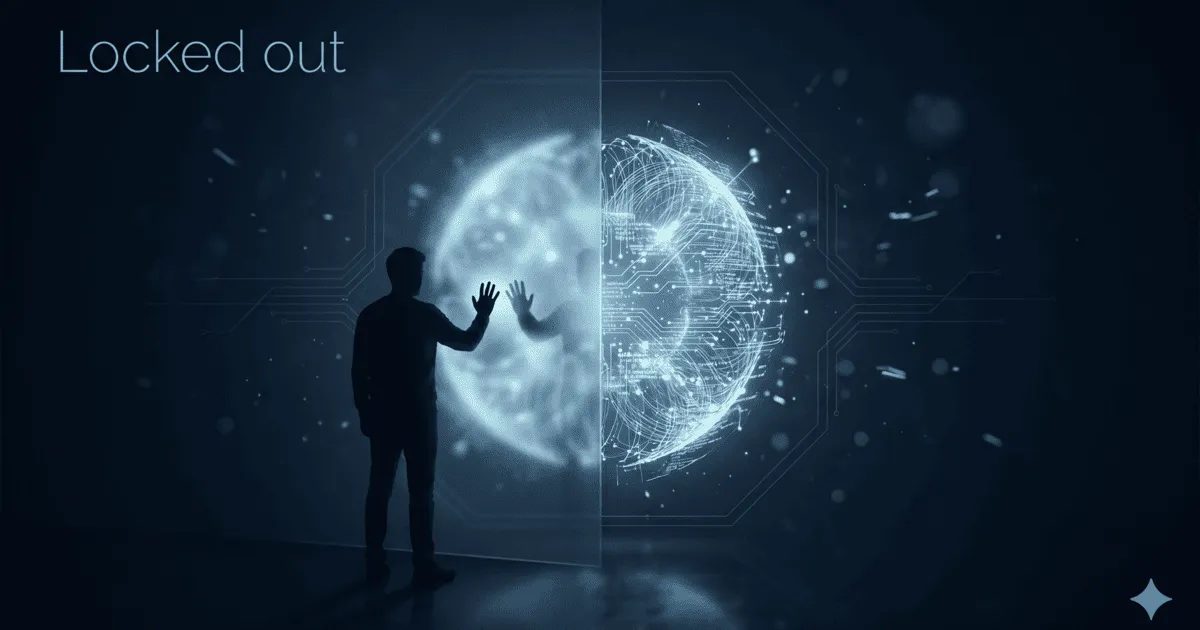 AI-generated image via Google Nano Banana
I have to be honest: I barely got to use it. And then, before I could really dig in, the model was taken away from me — not by Anthropic, but by a government. So this isn’t the deep-dive I planned. It’s something shorter and more personal: what I saw, what happened, and why it bothers me more than I expected.
Table of contents
Open Table of contents
The little I saw
I didn’t get enough hours with Fable 5 to write a proper review, and I won’t pretend otherwise. But even in that short window, I saw a lot of potential — the kind that makes you cancel your evening plans and keep poking at it.
Where it really clicked for me was code. Not just “write me a function,” but the harder, more valuable stuff: hand it a real codebase and ask it to reason about it as a whole. Find the security weaknesses. Spot the slow paths and suggest concrete optimizations. Explain why a piece of architecture is fragile, not just that it is. The early signs were that it could hold a large, messy project in its head and actually say something useful about it — the sort of analysis I’d normally need a senior engineer and a free afternoon to get.
That’s the part I was most excited to test seriously. I didn’t get the chance.
What happened
On 12 June 2026, the US government issued an export-control directive requiring Anthropic to suspend all access to Fable 5 and Mythos 5 for any foreign national, and to make sure its customers did the same. The reason given was national security. (Anthropic’s statement is here.)
I live and work in Switzerland, so as far as the directive is concerned, I’m a foreign national. Overnight, a model I’d just started exploring became something I’m simply not allowed to use.
And here’s the detail that made me put my coffee down. According to Anthropic, the security concern the government pointed to came down to a demonstrated technique that consisted of asking the model to read a specific codebase and fix the software flaws it found.
That’s it. That’s the thing I was excited about. The exact capability that had me canceling my evening — analyze a codebase, find the weaknesses, fix them — is the one that got the model pulled. The most useful thing it did and the reason it was taken away are the same thing. Anthropic disagreed with the suspension, called it a misunderstanding, and noted that other publicly available models can do the same — but it’s complying with the order while it works to get access back.
A country can lock you out — even the people who built it
The part that’s stayed with me isn’t really about Fable 5. It’s about who gets to decide.
A single government issued a directive, and a frontier model became off-limits to a huge slice of the planet in a day. No vote, no warning, no appeal I could file. If you’re building from the US, this barely touched you. If you’re anywhere else — Europe, Asia, most of the world — you just learned how quickly the most capable tools can be switched off above your head.
And it cuts deeper than users like me. Anthropic is a US company, but it’s full of people who aren’t American citizens — researchers and engineers who helped build this exact model. By the letter of a directive like this, they can be locked out of the thing they made. Let that sink in: you can pour yourself into creating something, and a rule written somewhere else can decide you’re no longer allowed to touch it. That’s not a software problem. That’s a strange new fact about how the most important technology of our moment actually works.
I hope it comes back — done right
I want to be careful here, because it’s easy to turn this into a rant, and I don’t think that’s fair either.
I’m not against AI safety. The opposite, really — a model that can read any codebase and find every exploitable flaw is genuinely dual-use, and pretending there’s no risk would be dishonest. If the people building these systems want to put real safeguards around the dangerous edges, I’m all for it. That’s the responsible thing to do.
What I struggle with is this version of “safety”: a blunt, border-drawn shutoff that lands on every developer using the model for ordinary work, justified by a capability that’s already everywhere. It feels less like a targeted safeguard and more like switching off the lights for a whole continent because one room might be misused.
So my honest hope is simple. I hope Fable 5 comes back — and comes back with safeguards that are real, thoughtful, and aimed at the actual risks, rather than a region-wide off switch. Make it safe and available. Those two things aren’t supposed to be in conflict, and the day they routinely are is a day worth worrying about.
Wrapping up
This wasn’t the article I meant to write. I wanted to tell you how good Fable 5 is at tearing into a codebase. Instead I got a front-row seat to how fast access to these tools can vanish, and how little say most of us have when it does.
If access is restored, I’ll come back and do the review properly — hands-on, measured, no hype. Until then, I’m left with a glimpse of something genuinely promising and a new appreciation for how fragile that promise can be.
Thanks for reading. If you’ve run into the same wall — locked out of a model where you live, or just chewing on what this means — I’d love to hear from you, via email or LinkedIn.
See you in two weeks.